

Cezzi's
© 2026 Cezzis.com | All rights reserved.
© 2026 Cezzis.com | All rights reserved.
A restrained, aromatic stirred cocktail combining gin and yellow Chartreuse, often finished with bitters and a citrus expression for a cold, herbal profile.
Servings
1
The Alaska is a quiet drink. It does not announce itself with color or garnish excess, and it does not need many ingredients to make its point. Gin and yellow Chartreuse are enough to create something crisp, herbal, and unusually cold in feeling.
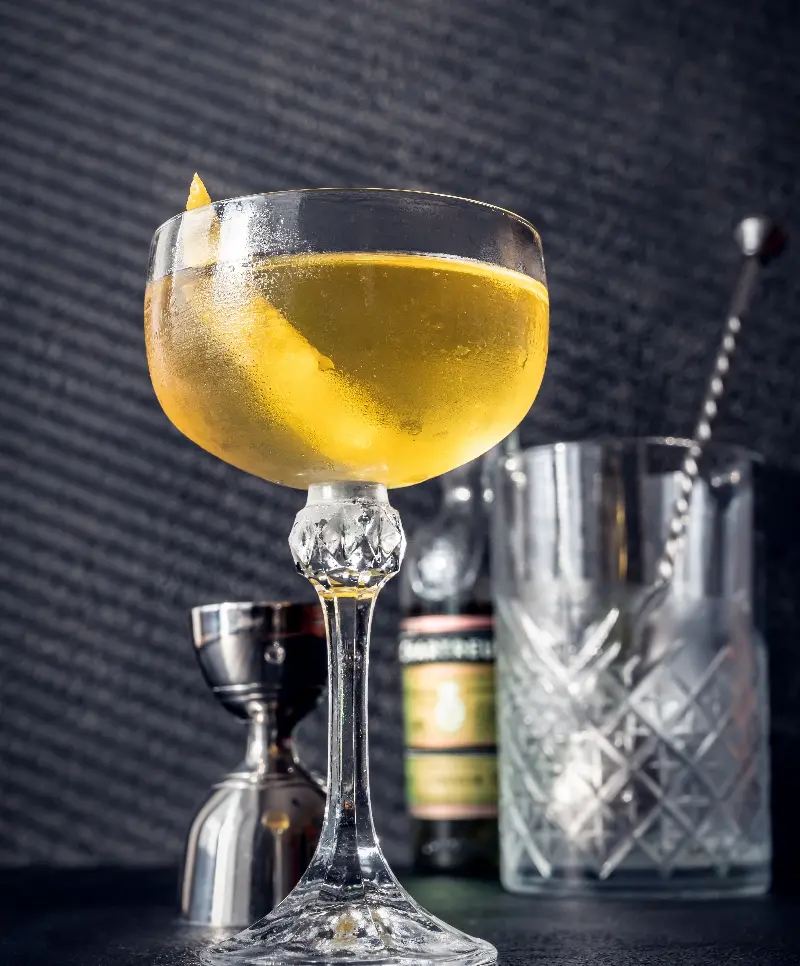
The Alaska appears in early 20th-century cocktail literature and is well known from the Savoy-era canon, though its exact first appearance is harder to pin down than that of some more heavily documented classics. What is not in doubt is the drink's style. It belongs to a family of lean, stirred cocktails that prize clarity over ornament.
That makes the name feel apt. The drink often reads as glacial: not in temperature alone, but in temperament.
Yellow Chartreuse does a great deal here. It brings honeyed herbal sweetness, alpine depth, and a rounded texture, but because the drink is anchored by gin and served very cold, it never turns syrupy or soft. Orange bitters and citrus expression sharpen the edges further.
The balance is delicate. Too much Chartreuse and the drink becomes lush. Too little and the point disappears. In its best form, the Alaska is exact.
The Alaska has never been as universally famous as the Martini or the Last Word, but bartenders keep returning to it because it shows how much flavor can live inside a restrained frame. It is a study in composure rather than impact.
That quality makes it memorable in a different way. Instead of overwhelming the drinker, it narrows the focus.
The Alaska remains valuable because it rewards cold service, good stirring, and careful proportion more than flashy presentation.
Best before dinner or in quieter evening service, when a crisp, aromatic stirred drink feels more appropriate than a louder classic. 🍸❄️
Nutritional and allergen information are estimates and for educational purposes only. Ingredient formulations change frequently across different commercial brands. A generic ingredient name (e.g., "coffee liqueur") may contain hidden allergens, dairy, or animal products depending on the specific brand you purchase.
Always review the manufacturer packaging and actual ingredients you use before consuming, especially if you have severe food allergies or dietary restrictions. Use this website at your own risk.
Discover other related cocktails you might also enjoy, with similar ingredients, style, or spirit.
Explore the curated collections this cocktail belongs to, grouped by spirit, season, holiday, and occasion.

Find cozy fall cocktails with apple, pear, cinnamon, maple, and richer seasonal flavors.

Explore winter cocktails with rich flavors, warming spices, and festive cold-weather appeal.

Browse gin cocktails from crisp classics to botanical drinks with citrus, herbs, and floral notes.

Find simple cocktails with minimal ingredients, quick prep, and easy at-home mixing.

Explore classic cocktails like old fashioneds, sours, martinis, and other timeless favorites.

Browse martinis from classic gin builds to vodka versions and modern twists.
Discover other related cocktails you might also enjoy, with similar ingredients, style, or spirit.
Explore the curated collections this cocktail belongs to, grouped by spirit, season, holiday, and occasion.
Find cozy fall cocktails with apple, pear, cinnamon, maple, and richer seasonal flavors.
Explore winter cocktails with rich flavors, warming spices, and festive cold-weather appeal.
Browse gin cocktails from crisp classics to botanical drinks with citrus, herbs, and floral notes.
Find simple cocktails with minimal ingredients, quick prep, and easy at-home mixing.
Explore classic cocktails like old fashioneds, sours, martinis, and other timeless favorites.
Browse martinis from classic gin builds to vodka versions and modern twists.


